HANDLING STORY & HANDLING STRATEGY ZOOM FAQs
These questions apply across both Handling Story and Handling Strategy sessions. Where the answer differs significantly between the two, both are addressed.
1. What do you need to provide?
ZOOM: You, a concept, a computer with a good screen and internet connection and ideally a ZOOM account, although Paul can work with other conferencing tools such as Skype, Google Meet, Microsoft TEAMS etc.
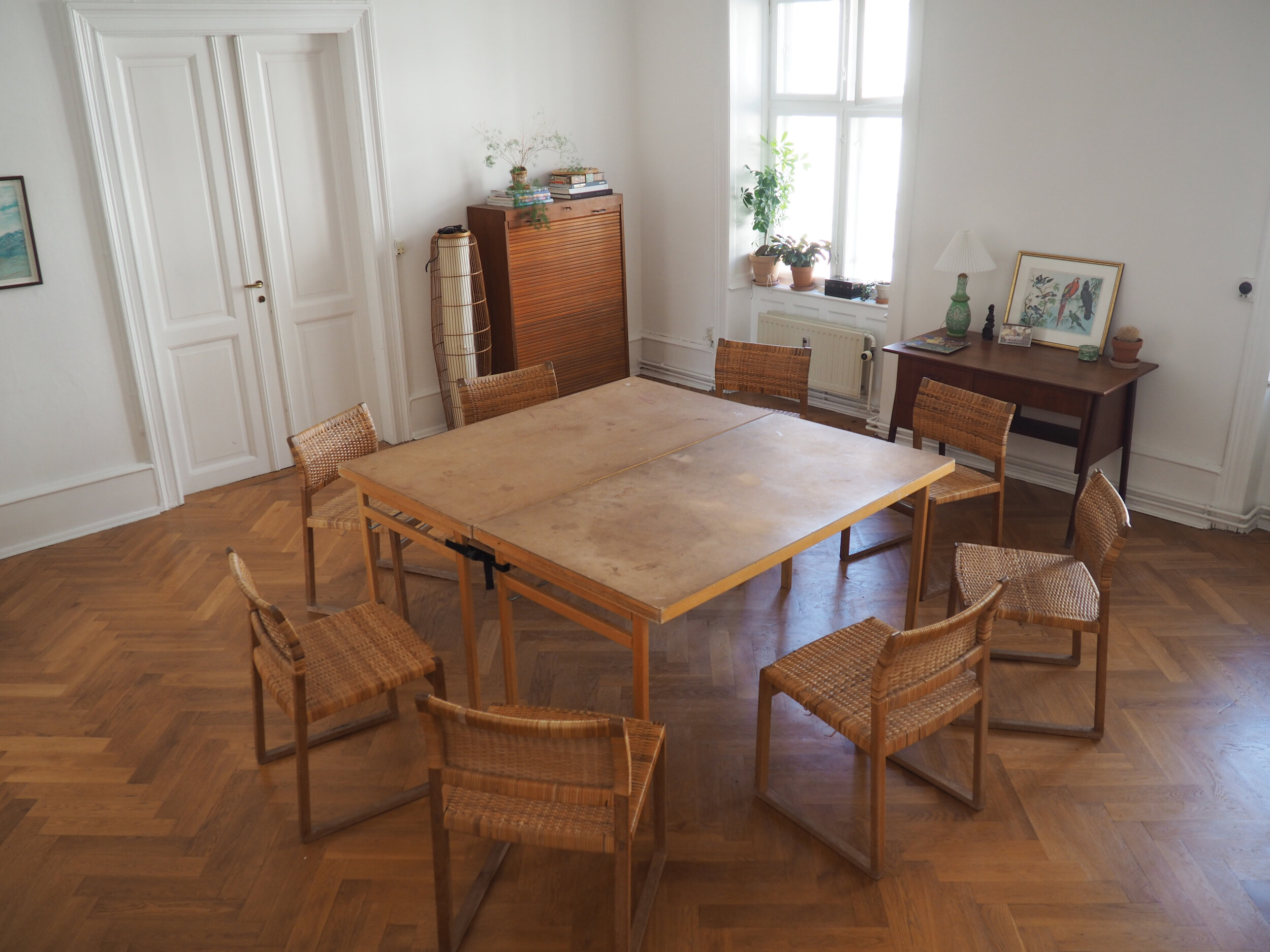
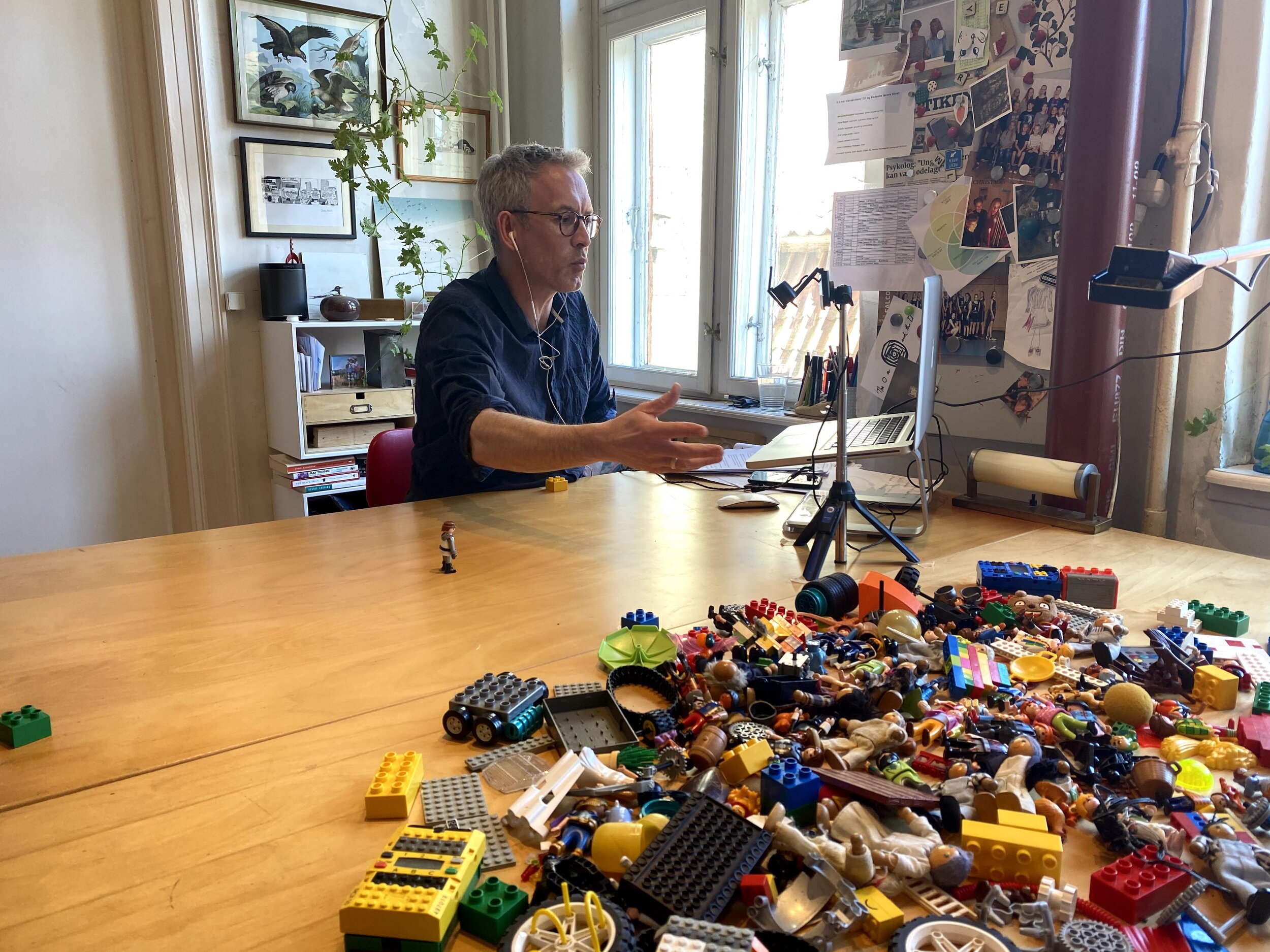
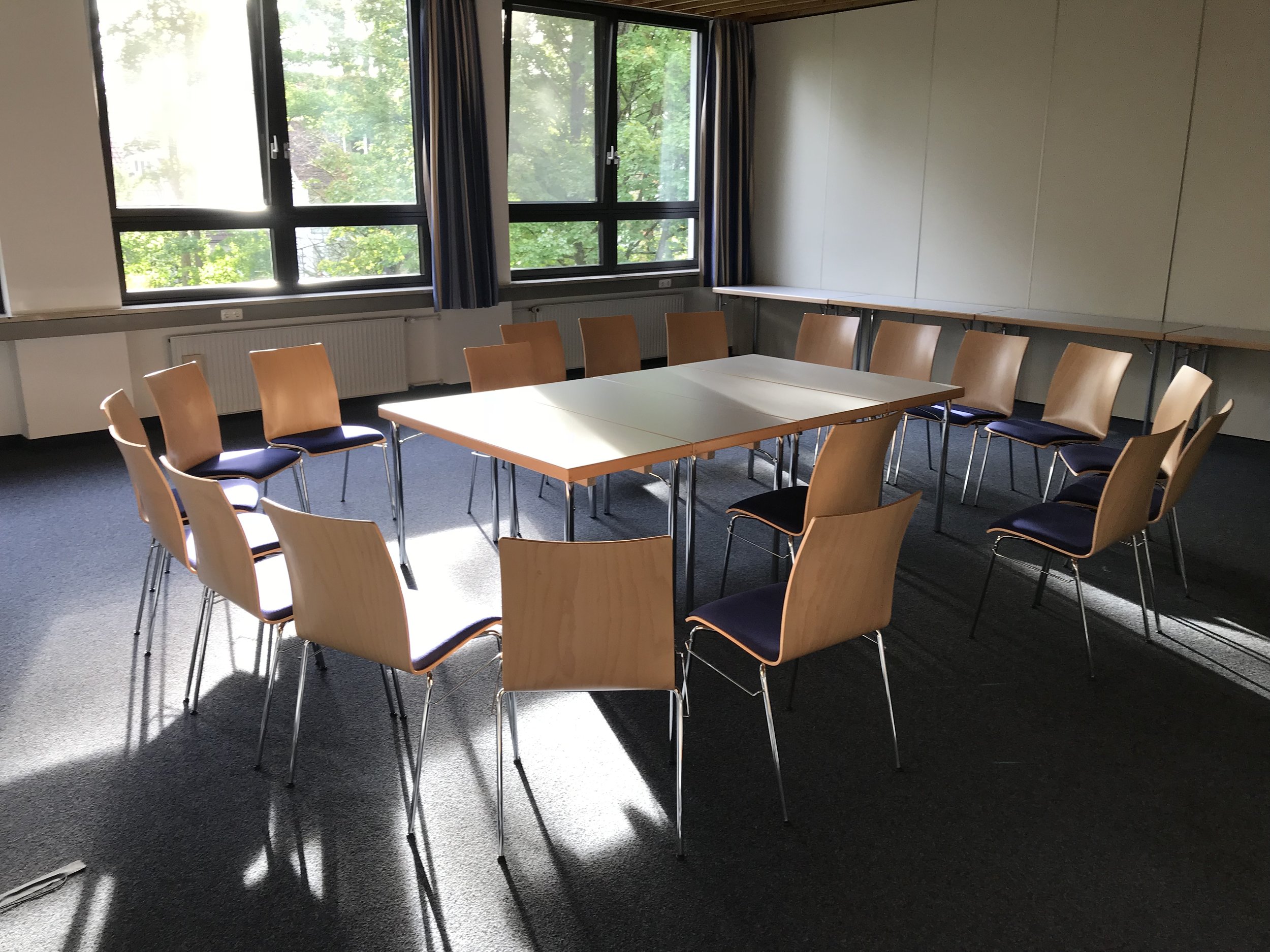
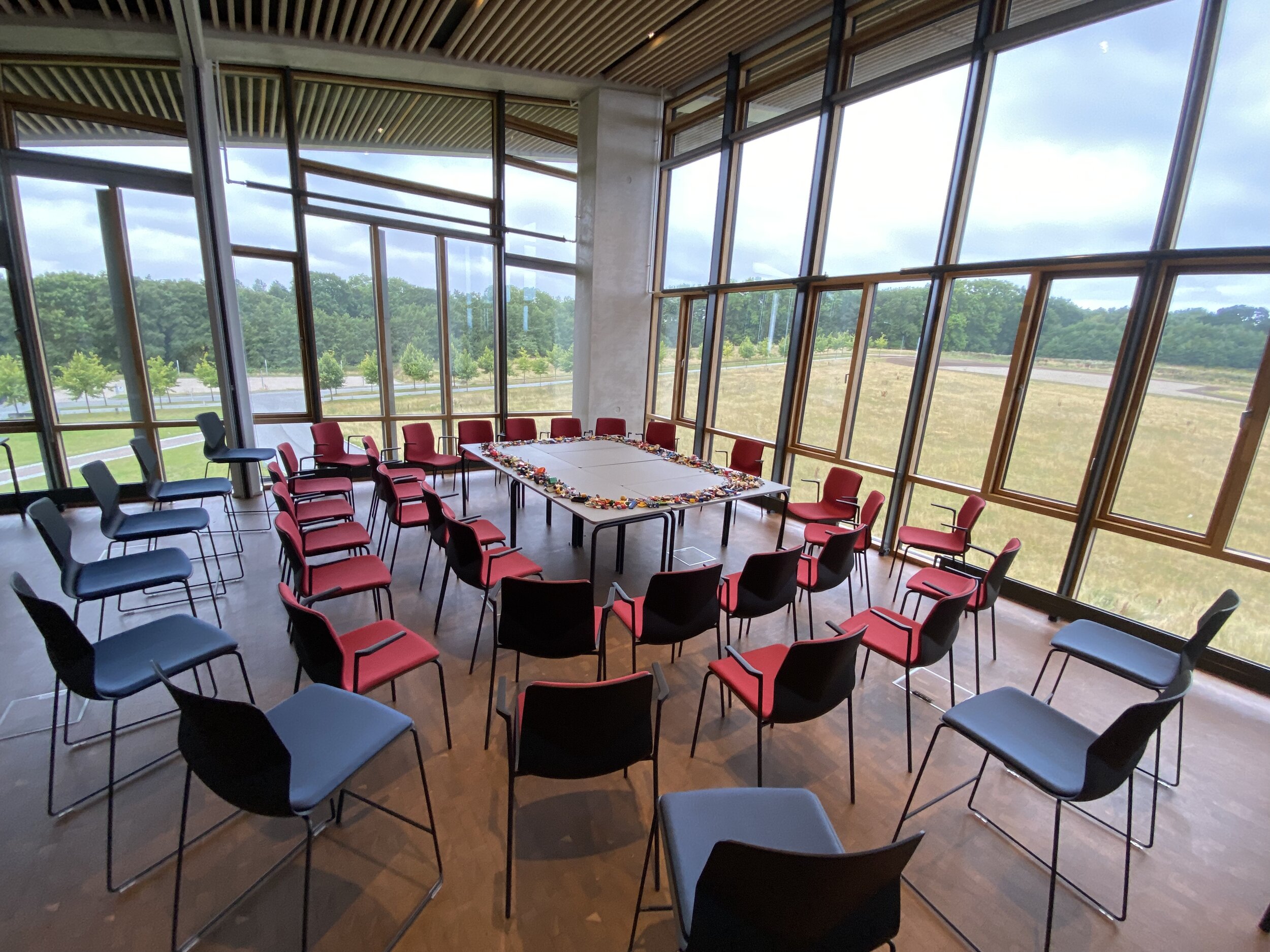
IN-PERSON: Paul can either host at his office on Copenhagen (see photo top left) or he’ll come to you which in that case, you’d need to provide a room with a table and a bunch of chairs. Table size depends on the number attending. Ideally a big table 2m x 2m (min 1.5m x 1.5m if around 7 or less people). It doesn't have to be one table, but can be a series of tables all pushed together, but must be the same height, the same colour and with no patterns. There can't be any gaps between the sides or corners and there shouldn’t be any holes in tops of the tables. The tables shouldn’t be covered with a cloth.
As you can see from the photos, it’s ideal that the table or table configuration is square or as close to square as possible so that everyone sitting around it can easily reach the centre. However a round table will also work.
Paul will bring the bag of objects.
2. How many people can participate?
ZOOM: Anything from 1 to a maximum of around 12 online can participate, although more are able to spectate if required.
IN-PERSON: When mapping around the table, anything from a one-to-one session up to around thirty-five, depending obviously on the space. Paul can host up to around 12 here at his office in Copenhagen. Much larger groups of around 200 - 300 have experienced the mapping as audience (example: Berlinale talk). In these cases we set-up a projector. More details can be sent when running it with an audience.
3. What language will they be in?
ZOOM & IN-PERSON: The mapping is held in English and has already been applied in twenty different countries. Its visual approach enables participants with varying levels of English to collaborate.
4. How long does the mapping take and where?
ZOOM & IN-PERSON: For Handling Story, most sessions run two to three hours depending on the complexity of the project and how developed the material is. For Handling Strategy, sessions typically run two to six hours depending on group size and the scope of the challenge being mapped.
5. Is this a one-off or does it require multiple mapping sessions? And when should we do them?
Mostly one or two sessions.
6. Does the mapping generate ideas?
Yes. Ideas emerge because externalising the structure reveals gaps and tensions that weren't visible before, without a Post-it® in sight.
7. I’ve heard of LEGO Serious Play™. Is that what you do?
There are similarities on the surface — both use physical objects to externalise thinking that is difficult to articulate in conversation alone. But the purpose and process are different.
LEGO Serious Play™ is primarily expressive. A facilitator guides groups — often multiple teams simultaneously — through a structured process of building and narrating models that represent their experiences, challenges or visions. The value is in what gets surfaced and shared.
This method is interrogative. The objects on the table aren't an end in themselves — they're a map that gets tested against a specific question. In story work, that question is whether your characters and their relationships are genuinely carrying the thematic tension at the core of your project. In strategy work, it's whether your team is actually looking at the same system or only agreeing on the surface.
That distinction — between surfacing and interrogating — is where the methods part ways.
8. Is this a team building exercise?
For strategy work it does bring teams together and team building is a significant by-product but not the main focus. Having a team deconstruct their situation and explore multiple perspectives guarantees a shared, deeper and consistent understanding across that team.
9. Why choose Paul Tyler over other consultants?
For story clients the distinction is your thematic focus — most script editors and story consultants work at the level of plot and character; you work at the level of the thematic tension underneath both. For strategy clients the distinction is speed and the mapping mechanism itself.
10. Do you provide any documentation?
Yes. If it’s a ZOOM session, then you will receive a recording of the entire session. Paul can provide photos and, when necessary, a video summary of your mapping session. These capture the vital elements of your project so that you can move forward with something concrete.
11. How much does it cost?
Sessions over ZOOM & in-person at the Copenhagen office - 150 € per hour exc. VAT.
All other sessions, price to be determined based on scope of work as it depends on group size and where you are based. So contact Paul, so he can hear more about you, and he’ll send you an offer.